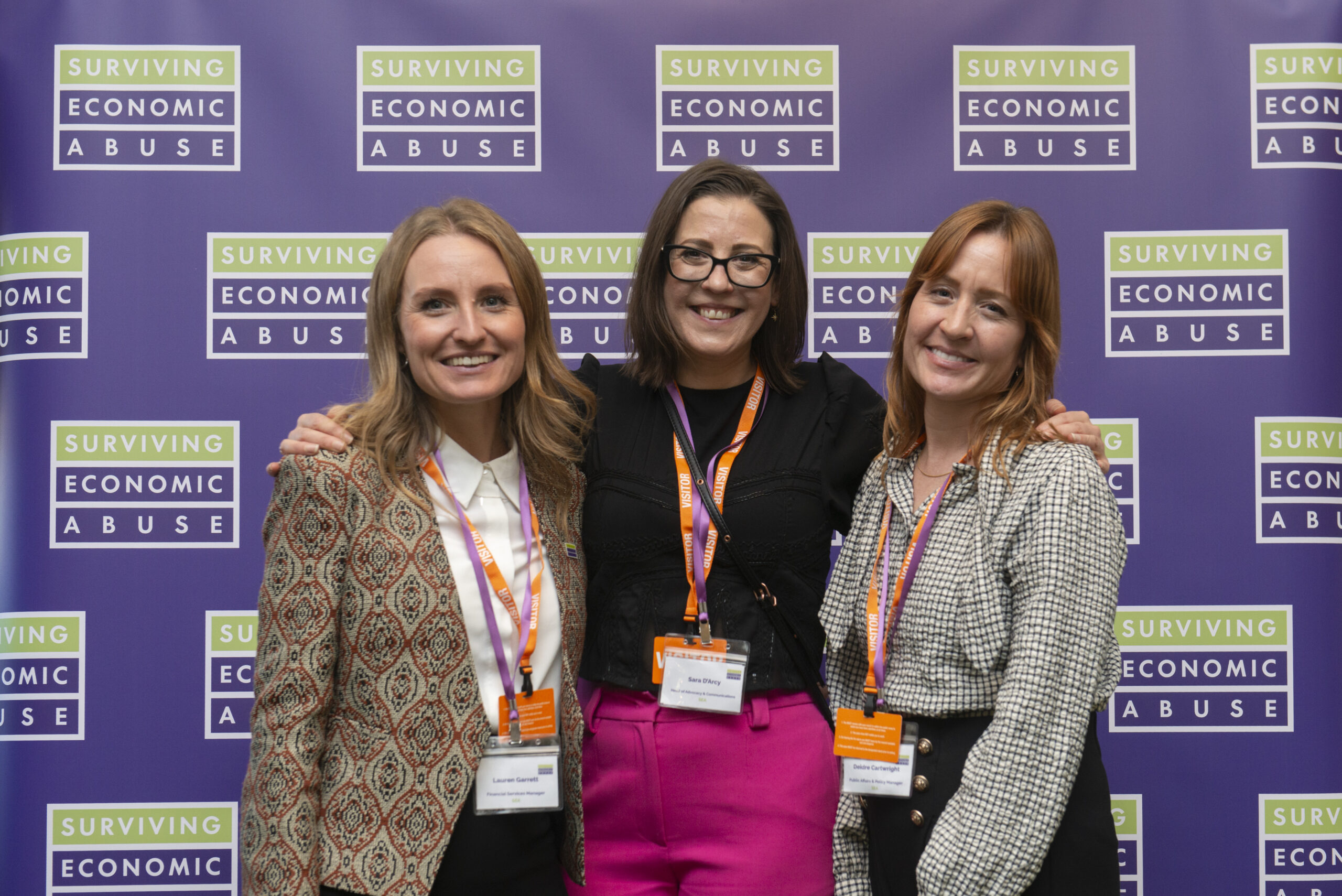
Our Head of External Affairs, Sara D’Arcy, reflects on our Economic Abuse Awareness Day 2026 parliamentary reception.
Campaigning for change can sometimes feel like lonely work. Progress can sometimes feel slow and there are days when the scale of what needs to change feels overwhelming. That’s why it is so important to come together in-person to remind ourselves that we are not alone. That we are one of many people pushing for change to help save lives and end economic abuse forever, and to also inspire more people to join our cause.
And that’s exactly why, each year, we at Surviving Economic Abuse host our parliamentary reception to mark Economic Abuse Awareness Day. This year’s reception was our fourth event since I joined SEA – and I think it was our best yet.
We were delighted that Matthew Patrick MP sponsored the reception and that it was proudly supported by Aviva plc. Looking around the room, it was brilliant to see so many people from across government, financial services, domestic abuse organisations, the debt advice and legal sectors, come together with survivors and the SEA team to mark the progress we’ve made but, crucially, what more we must do to end economic abuse.
And the need to accelerate action has never been clearer.
At the reception, we launched our new report, “Access denied, futures derailed”, which revealed that one in three young women and teenage girls aged 16–24 – equivalent to 1.3 million people – experienced economic abuse from a current or former partner in the last year alone. That is double the rate experienced by other age groups. Even more concerning, our research found that abusers are using technology to find new ways to cause harm with one in five 16-24-year-olds experiencing economic abuse through digital financial products.
These figures are a stark reminder that perpetrators’ tactics are constantly evolving, but even more concerning is the scale of economic abuse being perpetrated against the next generation. It was therefore incredibly important to hear government ministers recognise the prevalence of this hidden online harm and promise to take action to prevent it.
We heard from not one, not two, but three government ministers: the Home Office Safeguarding Minister Satvir Kaur MP, Family Justice Minister Jake Richards MP and Economic Secretary to the Treasury Lucy Rigby KC MP, who all reaffirmed their commitment to tackling economic abuse as part of the Government’s mission to halve violence against women and girls in a decade.
One standout moment was when Lucy Rigby shared the personal story behind her passion for tackling economic abuse. She shared that she met a constituent when she was campaigning to become a member of parliament who was experiencing joint mortgage economic abuse from a former partner who refused to be taken off the mortgage or contribute their agreed share to the monthly payments, causing her devastating and seemingly never-ending harm even though they had separated.
Her words sent a strong signal to everyone in the room, to mortgage lenders and most importantly to victim-survivors that she is committed to tackling joint mortgage economic abuse. We stand ready to work with her, parliamentarians, mortgage lenders and the legal sector to make the changes survivors desperately need to see happen.
It was also encouraging to hear from Aviva about the important role that financial services firms can play in response to economic abuse more broadly and its commitment to working with SEA to listen, learn and understand so that they can do better for customers experiencing economic abuse. We know that by working alongside survivors and experts like SEA we can build on the progress already made by the financial services sector and go further to ensure customers experiencing economic abuse receive consistently good responses.
The most powerful moment during the reception was the speech made by a member of the Expert by Experience Group, who shared her personal story of the impact the economic abuse had on her and her family. Her rallying call to everyone in the room was clear: listen to survivors, work alongside them and involve them in making the changes that will affect their lives.
We couldn’t agree more. Survivors must be at the heart of every decision. They should be meaningfully involved at every stage if we are to be successful in closing down opportunities for abusers, delivering effective support for victim-survivors and driving lasting change to stop economic abuse once and for all.
The reception lasted just two hours, but I am still feeling the energy from the room. From the commitments made by Government ministers to the pledges made by Parliamentarians and guests to take action to stand with economic abuse survivors, we heard loud and clear that we’re ready to turn the tide on economic abuse.
Because we know what is at stake. 4.2 million UK women experienced economic abuse in the last year. But change is possible when we work together.
So, my question is: will you join us?
This Economic Abuse Awareness Day, stand with us and the survivors we work alongside by:
- Learning how to spot the signs by taking our Spotting the signs challenge
- Start a conversation with your friends, family and colleagues
- Share our content on LinkedIn and Instagram to help more people in your network find out more
The more we talk about economic abuse, the harder it becomes to ignore. The more we shine a spotlight on gaps in our systems, the greater change we can drive to stop perpetrators from causing harm. The more we come together, the better chance we have of saving lives and stopping economic abuse forever.